


Why Everything Is,
What It Is?
__
Kiahh signifies "fresh beginnings". Like the beginning of School of Mathematical Sciences for NMIMS, Kiahh is the beginning of a socio- cultural committee for SoMS. As a result, the name was coined.
The planet suggests a progression from solid to stars. As Kiahh means "fresh beginning," the planet indicates the advent of something new. We chose the planet concept since mathematicians have made significant contributions to the study and investigation of our cosmos, and what better way to honour them than to depict a math school committee as a planet!
If we take a tiny philosophical detour when thinking about new beginnings, the origin of life can be traced back to the Earth. As a result, you'll notice earthy tones on our website and Instagram account.
Going back much further, there was one thing that employed our mathematical counter – time – before the origin of life. Although no one was alive to measure it, the concept was translated to exist at the time. As a result, we named our magazine Chrònos. A term of Greek origin that means "time."
From the Dean’s Desk

Mathematics is serious business. Understanding the language of Mathematics is a fascinating experience. To learn to translate problems from other languages into the language of Mathematics is insightful and potentially powerful. Since a statement in Mathematics is not just a statement, it is a statement open to a wide range of experiments and analyses. That is what makes Mathematics so unique. Even education is confused whether Mathematics is an art or a science. Mathematics is the only subject in which you can be a Master of Science or a Master of Arts.
“School of Mathematics – today, tomorrow, and forever.”
Another equally fascinating question is, are we here because Mathematics is here, or is Mathematics is here because we are here? Did we create Mathematics or did the Mathematical principles that govern everything result in the arrival of humans on earth?
Whatever your opinion, no one can deny that Mathematics is a perfectly beautiful entity. Studying and teaching Mathematics is an exciting adventure and seeing it in action, an experience of joy like no other.
Our School – the School that students and teachers have set up together, therefore, is a great adventure. Like all adventures, it has its difficult passages and easy-paced activities and we reach peaks and achieve new successes. That is what life is all about.
The School therefore will primarily strive for excellence and efficiency. We will continue to work on how to best train the student who loves mathematics and to take it to areas of human knowledge where it had never been before – doing what everyone else is doing is safe but boring. But to achieve this, we need to understand what we need to do, how much we need to teach, and how much we should leave to you to explore. How much should we protect you from stumbles, and how much we can let you learn by mistakes? This will remain an eternal challenge.
The school will progress, from the current 3 year BSc to a 4 year BSc – something the government did not let us do till recently. We will start a Masters’s and Ph.D. program and work with Mathematics, to teach, learn and explore. That is what we are here for. That is why we will remain here. The rest is technical details.
So we look forward, not to teach and learn but to build up a lifetime of friendship amongst lovers of the most perfect of human languages, Mathematics.
Mayank Vahia
Dean, SoMS
June 2021

Dr. Mayank Vahia
Starting Fresh: Vision for Ahead
Our college journey began at the time when the pandemic was at its peak. There was an atmosphere of uncertainty and fickleness around. After our internals, when November was at hand; Shraddha, Maryam and I collaborated to fabricate a socio-cultural space that could act as a platform for people to express their creativity, and unleash their skills candidly without the fear of being questioned or judged.
Building on this idea, we approached our Dean Dr. Mayank Vahia, and coordinator Ms. Vaishali who gave a direction to our idea. With this, we three established the official “Socio-cultural committee of SOMS”.
Moving further we started including all our batchmates and we even approached our seniors - Akita, Anoushka and Riya who were always helpful and motivated us highly.
In the span of 2 months, we became a 22 member committee with 5 heads and 3 presidents.
This beautiful name Kiahh originally came from ‘Akiahh’ which means’ New and Fresh’.
The foundation of Kiahh is based on the concept of a fun society.
The vision that we aim for Kiahh is for it to become one of the renowned communities known for its warmth, innovations, and fun-loving management.
-Chinica Madurkar, President and Co-Founder
Growing up I found extreme joy in doing multiple activities in a day. As I entered University in a pandemic, I found it extremely tough to live with the monotonous vibe. I was missing the adrenaline rush of the lights going off and everyone chanting loud. I wanted my peers to live their college life to the fullest by not only learning but also finding joy in trying new things and meeting new souls as we planned from our school days. If anything, SoMS has the kindest people who are always keen to help. It has an amazing dean, Dr. Mayank Vahia, Ms. Vaishali, and the ever-supporting faculty that we cannot be enough thankful for.
‘Kiahh’ wouldn't be born without Chinica, Maryam, and our friends' support. This committee was built by each one of us to let our inner leaders rise and our creative brains wander free.
We hope ‘Kiahh’ becomes an emotion and not just a cultural committee. A group that can change the mindset of the society, help the ones in need and break through the social norms whilst forever growing and remembering their worth. Through ‘Kiahh’, we want to spread the idea of kindness and respect for everyone and let the students of SoMS find their niche.
-Shraddha Menon, President and Co-Founder
For as long as I can remember, there wasn't any day in my school life that was dull or monotonous. I was constantly trying something new, participating in everything! You would never see me sitting in one place. And that is exactly how I expected my university life to be. Little did we know how this pandemic would change our way of life, sitting at home, all day in front of a screen, with no activity to do whatsoever. To add to this humdrum, the School of Mathematical Sciences was a new venture by NMIMS, thus having no activity or committee to be a part of, to take our minds off.
Through this rigorous course, I deemed it necessary to have a platform to express ourselves, have the opportunity to be a part of something far beyond just a degree, have a fulfilling university life. And so, Chinica, Shraddha, and I came together to form the very first committee of SoMS, ‘Kiahh’, meaning, new beginnings.
Chrònos, our e-magazine, is an example of new beginnings. It is something I have been working on ever since the committee was created. And now that we have published our magazine, the magazine so many people have worked on, with sleepless nights, it's a surreal yet homely feeling. It is proof that 'It's not about ideas. It's about making ideas happen.'
I see this committee as an opportunity to build ourselves, work as a team, make lasting friendships, share emotions and experiences, make memories, make a difference and be different. My goal for the committee is to make it one of warmth, strength, and leadership, a place everyone looks forward to.
-Maryam Mozayan, President and Co-Founder
Meet The Team


Maryam Mozayan
Internship to PPO conversion: Is there a sure-shot formula?
What should I do to convert my internship into a PPO? What are the key markers of such interns that managers keep looking for? There are no straightforward answers, but, seemingly a set of values, skills, and behaviours do enhance the odds to get a PPO. Some of these are discussed below:
Sincerity: Take your job very seriously as if you are going to make a big contribution. Let that be visible to people around you.
Punctuality: ‘First in last out’ is a good idea. Be there on time and extend your work hours for meaningful engagements.
Enthusiasm: Complete each task with that spirit of learning and do not settle for anything less than a great output.
Assist: Look for such opportunities to help your mentor in any of his/her/their projects.
Ask questions: Ask questions to communicate that you want a deeper understanding. Take time and prepare your questions and do not expect ready answers.
Research: Offer your time if some data crunching or research is required to find answers.
-Anoushka Sharma
Email Template
Subject line: Pleasure to intern with [company name]
Dear [manager’s name],
Thank you for giving me the opportunity to intern with [company name]. It’s been a pleasure working with you and the team on [projects you enjoyed] and learning more about [quality of the company that you admired]. I am grateful to have worked with such an incredible team and to have developed my [skill you developed]
I’m graduating in [month and year of your graduation date] and will be seeking a full-time role in [name of the industry]. Pursuing a career with [company name] would be a dream come true and I’d love to be considered for any upcoming positions on the team. I’ve compiled a list of things I accomplished during this internship, to show you how I can contribute to your company as a full-time employee.
Please let me know what you think and if we could discuss this in more detail. Thanks again for giving me a fantastic internship experience and I hope to work with you again soon..
Best regards,
[Your name]

Aye-Aye! What A Day
Freshers’ by KIAHH
Freshers’ week is a daunting experience for newly turned teen adults. Freshie Angad Arora mentioned- they were already experiencing the orientation week butterflies as well as were not in a good mood but the freshers’ event organized by KIAHH helped them cope up. It was something they never expected out of a zoom meeting and now, would always prefer the online version of the freshers’ event. Well, what was it?
The afternoon of the seventh of august was an unexpected but beautiful surprise for the faculty and freshers of the School of Mathematical Sciences Batch of 24’. “Pirates for Hire” the virtual treasure hunt event was organized by the
Student Committee, also known as KIAHH.
According to the winning team captain Maryam Mozayan, "It was an exciting experience! I loved the entire prep work which was worth all the pain.” The virtual treasure hunt wasn’t any usual loot but a challenging and fulfilling experience accompanied by great music by Rakshit Gupta (@hum_og_jiyege) and prizes sponsored by stylewithyash.com.
As Maryam mentioned it was a task to plan a virtual event for freshers and faculty; to make a group of anxious and excited kids stay hooked to the screen is always challenging. Yet most of them enjoyed it with their whole heart. Freshie Kishan Vagadia says, "the freshers’ event was the highlight of my orientation. It was marvellous and it helped me get out of my comfort zone and reach out to the delightful people in my batch!”
The rule of the house was to always respond with an aye-aye! instead of a yes. Why? Because they were all pirates for hire! Well not hired exactly! Every team consisted of team captains or hosts from KIAHH and 4 freshers who had not interacted before. Apart from these 8 teams, we had a special team of teachers under the captaincy of Kanishk Jena and Ansh Kharbanda. Ansh believes that it is absolutely fun to interact with the teachers informally.
Each team travelled across 8 islands to finally reach the treasure. The team that reaches the fastest, loots! Each island consisted of an exciting individual as well as 1v1 games where once again, teams had an opportunity to loot but this time from the opponent.
As crazy as the games, were the names of the teams -from black biryani to I<3Arjun, they were as silly as they could get.
The day wrapped up on an amazing note. Mellow, yet filled with excitement. The team spirit was seen till the end.


WELCOME CLASS OF ‘24!
Welcome to the SoMS family of learning and exploring Mathematics. I thank all of you for joining the school and enriching us with your mathematical ideas and congratulate you for choosing Mathematics, the language of science and nature. Within NMIMS, we are a small family of people from various parts of the country who love Mathematics and like to contribute to mathematics. We have a versatile and dynamic course structure consisting of different possible aspects of mathematics which leads to a one-year-long project in any area of human learning chosen by the students. Our final year students are currently doing the mentioned project in many different areas and thus enriching us with different ideas and techniques. I hope you will get enriched from all of these and enrich us with your contributions.
Apart from mathematics, our existing students are quite enthusiastic about many extracurricular activities. Even in the Covid situation, when we cannot gather on the campus to celebrate any of the festivals, they arrange online programs, activities regularly. These programs always bring fresh air, keep all of us connected and motivated which strengthens the family bonding and creates a better teaching-learning environment. I hope you all will be interested in participating in all these activities and arrange many in the future.
I hope you all will enjoy your journey of Mathematics with us, will learn a lot from your seniors, teachers, the whole family, and will teach a lot to all of us. Finally, I wish this school will become one of the eminent centres of learning mathematics in and outside the country with all the contributions of its existing and upcoming family members.
-Dr. Priyabrata Bag
Much like us!


4 WAYS PROBABILITY CAN BE USED IN A REAL-LIFE
From determining weather to making informed decisions
Probability refers to a number that reflects the likelihood or chance that a certain event will occur. It is that branch of Mathematics that we use most often in our day-to-day lives without even realizing it.
At some point, we have all made decisions by throwing dice or flipping a coin. For instance, we use a coin toss in cricket to determine which team will have the right to choose whether to bat or bowl first.
There are numerous other practical applications of probability in real life:
Weather Forecasting: If the weather forecast on the news or the weather app on your phone informs you that there is an 80 percent chance of rain, you might just carry an umbrella when heading out. Meteorologists study the historical record of the conditions of an area, like temperature, humidity, and pressure, to determine the chances of rain. Using these factors, you can calculate the probability of rain falling in that area.
Sports: Probability plays a critical role in sports strategy. For example, statisticians and analysts study the historical records of players to determine which position they are best suited to play at and how likely they are to perform well in certain playing conditions. Probability also allows statisticians to calculate a team's probability and make informed decisions about whether a team is likely to win a game.
Healthcare and medicine: When advised to undergo surgery, the success rate of a procedure or operation plays a critical role in a patient's decision-making process. The success rate is the percentage of success among a number of attempts. For instance, if 42 out of 50 patients have a successful surgery, the success rate can be calculated as follows-
42/50 = 0.84
Now, to convert it into a percentage, we multiple it by 100.
84 X 100 = 84%
Hence, the success rate for the surgery is 84%. That number might put the patient at ease and help them make an informed decision.
Typing on Smart Devices: When we're typing away on our smartphones or tablets, we often notice how the keyboard software offers suggestions or predictions. A lot of times, those predictions are actually helpful. How does the keyboard even know which words we are more likely to use? It does this using machine learning models that leverage the concept of probability.
-Anouskha Sharma
Mathematical Crusade

Growing into adolescence, I found solace in the definitiveness of Mathematics in an otherwise unpredictable world. Learning classical dances and music introduced me to 'taal' (beats) which is yet another display and use of Mathematics that is an integral part of performing arts. Unfortunately, by the time I was introduced to calculus, I had reached the dreadful stage in our education system where everything had become about the score or the percentage.
I always loved Mathematics. I consider it to be the purest form of human creation. The basic nature of solving problems and simplifying them to find the solution appealed to me from a young age. Being able to find unknown quantities is just surreal and in a way magical. I can still recall being absolutely blown away when my teacher solved an equation for the first time by juggling the components over the equal sign, and the addition turns to subtraction and voila….you have the unknown value. For my 10-year-old brain that was nothing less than a magician pulling a bunny out of their hat.
As fascinating as I did find it, amidst the endless mugging up of formulas, I was unable to fully appreciate it. Still, I thoroughly enjoy how calculus teases my brain and the sense of satisfaction I receive on finally reaching the solution is incomparable.
The idea of interpreting Mathematics as literature and adapting a numerical approach to human thinking intrigued me. It also led me to the realization of how I subconsciously always did. From introducing logic into decisions, interpreting art and understanding the flow of music in terms of graphical nature.
Classical music consists of ‘taal’ onto which the pieces (the ‘bandish’) is set to create a beautiful melody. Instinctively, I visualized classical Raagas and Bandish like a line flowing on a graph creating loops and turns as the 'sur' demands forming a mesmerizing piece of art even visually. I even traced some of the pieces on a handmade graph for myself to better remember the Bandish.
If I’ve to be completely honest, I do not have a specific career plan. However, the idea of translating any subject into Mathematics to derive a higher understanding of it is inspiring to me.
-Disha Desai

Mathematical Geometry in Food
Food in the shape of triangles is both fashionable and delicious. Triangles provide visual interest to your cuisine and make it ideal for Instagram stories. Samosas, nachos,
pizza, triangular sandwiches, waffles and Toblerone are just a few examples. It goes on and on. Here, we'll look at some of the most beautiful and fascinating uses of mathematical geometry in food!
1. Pringles: Pringles are nothing but a hyperbolic paraboloid (saddle-shaped). Apart from the fact that a Pringle naturally fits between your tongue and the roof of your mouth, why is the chip's hyperbolic paraboloid geometry so special?
a) The saddle design made it easy to stack chips. This is why, even with all of the other Pringles stacked on top of it, the bottom-most Pringle does not crack. This reduced the chances of chips breaking during shipping.
b) Because it's a saddle, there's no way to forecast how it'll break up. This heightens the crunchiness and, as a result, the strange satisfaction.
c) When compared to other shapes, the press block is relatively easier to make.
2. Romanesco Broccoli: The symmetry of Romanesco broccoli is lovely. It has a fractal-y
appearance. Mathematicians study fractals, which are shapes that recur on smaller and smaller scales. We can't declare that romanesco broccoli is a real fractal because nothing on Earth is.
3. Fortune cookies: Fortune cookies are unique and quite interesting. It's a bit like making a Pringle, where you start with a disc then bend it in two ways. Although they are topologically a disc, the shape of a fortune cookie lacks a geometrical name.
4. Donuts: Surprisingly, a donut and a cup have the same topological shape! The
shape of a donut in itself is a torus.
5. Egg: An egg is intriguing because it resembles an ellipsoid, albeit it isn't quite one.
-Dikshita Bhatnagar


Recommendation Montage

Violence against women during COVID-19
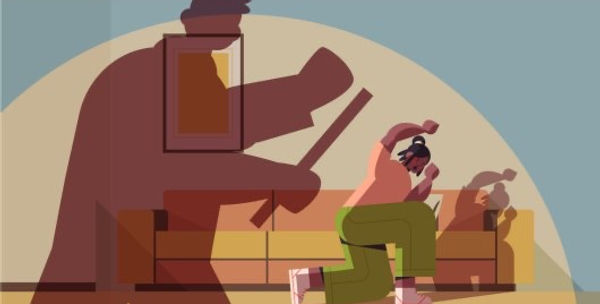
Domestic violence usually begins when one partner feels the need to control and dominate the other. This need to control may arise due to low self-esteem, extreme jealousy or when one feels inferior to the other in terms of education and socio-economic background. It may also arise due to various strong emotions such as difficulties in regulating anger to name one (Toby D., What Causes Domestic Violence, Para 2).
Physical abuse, sexual abuse, emotional abuse, isolation, verbal abuse, using male privilege, economic privilege and stalking are some types of abuse.
According to Vignesh Radhakrishnan, Sumant Sen, Naresh Singaravelu (The Hindu), violence against women and girls is a human rights violation. Since the outbreak of Covid 19, reports have shown all types of violence against women and girls, particularly the intensity of domestic violence.
In 2020, between March 25 and May 31, 1477 complaints of domestic violence were made by women. This 68 day period recorded more complaints than those received between March to May in the previous 10 years.
The number of complaints received in 2020 has been the highest in Uttar Pradesh and Delhi.
86% of women who experience this haven't sought help while only 77% report. Among 14.3% of victims who sought help, only 7% reached out to relevant authorities but more than 90% of the victims sought help from their immediate families.
As many countries announced lockdowns in the wake of the COVID19 pandemic, the “home” was seen as a refuge. However, the increasing instances of domestic violence raises the question on this International Day for the Elimination of Violence Against Women – Is the home really a safe place for women? Globally, nearly 243 million women and girls between 15 to 49 years were subjected to sexual and/ or physical intimate partner violence in the last year (UN Women, 2020). A survey of 122 community organisations shows that 85% of them reported a rapid increase in violence against women and girls (VAW/G) between March – September 2020 (UN Trust Fund to End VAW, 2020). This alarming increase in domestic violence has even earned a moniker, “the shadow pandemic.”
The National Commission of Women (NCW) received 13,410 complaints of crimes against women between March – September 2020, of which 4,350 were domestic violence. Complaints peaked in the March-May period, with 1/3rd of complaints being filed in these 3 months alone. Ravindran and Shah (2020) estimated that in May 2020, the increase in domestic violence complaints in red zone districts was 131% higher than those in the green zone districts with fewer restrictions. Red zone districts also saw much higher increases in complaints of cybercrime. Only 14% of women who have ever experienced violence seek help, thus making it clear that figures of reported violence are only the tip of the iceberg.(Mitali Dikore , Times of India,2020)
The Ebola outbreaks (2014-20) demonstrated that various forms of violence are exacerbated in crisis contexts, including trafficking, child marriage and sexual exploitation and abuse. VAW/G can negatively impact female labour market participation, earnings, mental health, child health, and household consumption, with economic costs ranging from 1-4% of global GDP.
So far, only 48 out of 206 countries (including India) have treated VAW/G- related services as an integral part of their COVID-19 response plans (UN COVID19 Gender Response Tracker). Countries like Spain, Singapore, South Africa declared services to protect and assist victims of gender-based violence and their children an essential service. Free, discreet, round the clock, and scalable digital solutions are proving to be instrumental in mitigating domestic violence in this pandemic when physical and family support networks for survivors are compromised. WhatsApp / web-based hotlines, online support groups, and social media campaigns to change attitudes have been deployed across countries to tackle domestic violence, with some countries standing out for their best practices. The Czech Republic adopted the Bright Sky app and trained delivery personnel on how to recognise and react to signs of domestic violence (e.g. by asking closed questions). France started an innovative system, where women could report domestic violence at pharmacies using the codeword “mask19”. New Zealand announced a NZ$200 million budgetary allocation to fund domestic violence prevention and rehabilitation and started a $1 million fund for organisations combating domestic violence. In India, efforts have been made to ensure that existing government schemes such as One Stop Centres, Ujjawala Homes, and Emergency Response Support System remain operational. Notably, 33% of violence complaints were made via the NCW’s WhatApp based helpline launched in April 2020, suggesting that a discreet method of reporting was much needed during the pandemic. State government initiatives, such as Uttar Pradesh Police’s “Suppress corona, not your voice” campaign, Odisha Police’s Phone-Up programme, Kerala State Commission for Women’s tele-counselling facility, Maharashtra Government’s Akshara Centres, Special Cell for Women and Children, and the #LockdownOnDomesticViolence campaigns were important steps, signalling intolerance for domestic violence across governments.
In a country where every third woman faces some form of domestic violence, and 52% of women and 42% of men believe it is justified for a husband to hit his wife, there is a need for a long-term national strategy to combat VAW/G (Mitali Dikore, Times of India, 2020)
Now, where does this idea of abuse - let it be physical, mental or emotional come from? It may seem odd to think that cultural or traditional beliefs sometimes lead to the risk of domestic violence, but many cultures have deep-rooted beliefs that men are superior to women. Another important role is played by mental illness. Individuals who have been diagnosed with a mental illness such as bipolar disorder or schizophrenia may go through times of highs and lows when they are unable to control their anger(Toby D., What Causes Domestic Violence, Para 3). These people may become aggressors and abuse others. While some other people may have learnt this behaviour from growing up in a household where domestic violence was accepted as a normal part of being raised in their family.
Coming to how COVID-19 has added to our problems. Now that the abuser has greater freedom while the victim's movement is restricted, domestic violence has seen a rise. Lockdown measures have led to the emergence of violent behaviour by increasing pandemic related stressors, forced proximity and by limiting access to protective resources (Ertan D., El-Hage W., Thierree S., and Hingray C. Increased Domestic Violence Injuries During COVID-19). Help has been curtailed due to lockdown. Courts open only for emergency hearings (Ratnam D., Domestic Violence During COVID-19- Lockdown Emerges as a Serious Trouble). Various NGOs and other organisations aren't able to reach the victims to provide on-site help due to the rising count in COVID-19 cases. The Protection of Women from Domestic Violence Act (PWDVA) 2005, is a legislation aimed at protecting women from violence in domestic relationships. The law is well written, wide-ranging and holistic. It covers, mental as well as physical abuse, and also threats to do the same. Any form of harassment or harm to health, safety, limb or well-being is covered. The following shows a few details that are covered by the law.
Physical abuse: Defined as act or conduct that is of such a nature as to cause bodily pain, harm, or danger to life, limb or health or impair the health or development of the aggrieved person. Physical abuse also includes assault, criminal intimidation and criminal force.
Sexual abuse: The legislation defines this as the conduct of “sexual nature” that ‘abuses, humiliates, degrades or otherwise violates the dignity of a woman.
Verbal and emotional abuse: Insults/ ridicule of any form, including those with regard to the inability to have a male child, as well as repeated threats.
Economic abuse: Categorized as including deprivation of financial resources required for survival of the victim and her children, the disposing of any assets which the victim has an interest/stake in and prohibition/restriction of financial resources which the victim is used to while in the domestic relationship.
However, the implementation of the law was flawed. In many districts, instead of employing Protection Officers, existing government officials were given this responsibility as well; and were not equipped to deal with the same. Therefore they did not fulfil most of the duties specified in the Act, and because of that victims are not able to make full use of the law for their benefit. Similarly, with regard to shelter homes, the Act specified that there should be as many as deemed enough. However, research into actual implementation (Feminism in India Media Pvt. Ltd.) has shown that many districts do not have even one shelter home.
SOLUTIONS
1. AGGRESSIVE CAMPAIGNING
Educating people through organizing campaigns is an efficient way to forth ideas and raise awareness. Social Media is one such powerful tool. In response to the news of domestic violence, many Indian celebrities encouraged “men to take a stand” and “women to break the silence”. More recently, NGO SNEHA with the help of several Bollywood actors/actresses took to Instagram to draw attention to the unheard voices of domestic violence victims. Such campaigns target perpetrators to make them feel ashamed or guilty. The hope is that this will prompt them to change their behaviour.
2. MASK 19
This is a code word used at pharmacies to escape domestic violence during the lockdown. Some women are unable or too afraid to call the police. If women cannot talk openly, they can simply walk into the store and use the codeword “mask 19”.
3. ONE-STOP CENTRES
These are centrally sponsored schemes of the Ministry of Women and Child Development. They provide integrated support and assistance under one roof to women affected by violence, both in private and public spaces. The aim is to provide the following services :
a. Emergency response and rescue services
b. Medical assistance
c. Legal aid and counselling
d. Shelter
4. INTERVENTION BY A COUNSELLOR
With simple access to a smartphone, women can download the SHEROES app. Women can attend regular live chat sessions with mental health counsellors. A counsellor's approach might be different with the client involved and should be tailored to the experiences and symptoms.
5. ESSENTIAL SERVICE
It is high time that the government of India regards domestic violence as an essential service. It should be in the frontline of our policies and should be paid immediate attention.
Reference List
WHO- Covid19 & violence against women, WHO, https://apps.who.int/iris/bitstream/handle/10665/331699/WHO-SRH-20.04-eng.pdf
The Shadow Pandemic, UN Women, https://www.unwomen.org/en
The link between lockdown, covid 19 and domestic violence, Arjun Kumar,Balwant Singh, Simi Mehta, https://idronlinr.org
COVID 19 and domestic violence against women, Mansi Vora, Barikar C Malathesh, https://www.ncbi.nlm.nih
COVID-19, Domestic Abuse and Violence: Where Do Indian Women Stand?EPW, https://www.epw.in/engage
Pandemic Triggers Domestic Violence, Prachi and Astutya Prakhar, https://www.theleaflet.in/
Domestic violence during covid 19 lockdown emerges as a serious trouble, Dhamini Ratnam, https://www.hindustantimes.com/
Impact of COVID-19 Pandemic on Women: Health, livelihoods & domestic violence, Sana Malik and Khansa Naeem, https://www.jstor.org
The impact of Covid-19 on the Women, Peace and Security Agenda, Kari M. Osland, Maria Gilen Røysamb and Jenny Nortvedt, https://www.jstor.org
Responding to domestic violence and abuse in covid 19, https://www.universitiesuk.ac.uk
Domestic violence in the COVID-19 pandemic: a forensic psychiatric perspective, Lisieux E. de Borba Telles, https://www.scielo.br
An increasing risk of family violence during the Covid-19 pandemic: Strengthening community collaborations to save lives, Andrew Campbell, https://www.sciencedirect.com
COVID-19: India’s Response to Domestic Violence Needs Rethinking, Shalu Nigam, http://southasiajournal.net/covid-19-indias-response-to-domestic-violence-needs-rethinking/
Covid-19 and Domestic Violence: an Indirect Path to Social and Economic Crisis, Amalesh Sharma & Sourav Bikash Borah , https://link.springer.com/article/10.1007/s10896-020-00188-8
Exacerbation of Physical Intimate Partner Violence during COVID-19 Lockdown, Babina Gosangi*, Hyesun Park*, Richard Thomas, Rahul Gujrathi, Camden P. Bay, Ali S. Raja, Steven E. Seltzer, Marta Chadwick Balcom, https://pubs.rsna.org/doi/10.1148/radiol.2020202866
Study: Increased Domestic Violence Injuries During COVID-19, https://www.tandfonline.com/doi/full/10.1080/20008198.2020.1800245
Violence against Women and Girls, Sangeeta Rege, Padma Bhate-Deosthali, T K Sundari Ravindran, https://www.taylorfrancis.com/books/9780429285462
covid 19 and impact on women , https://inbreakthrough.org/
Domestic violence high in 10 years, vignesh radhakrishnan, Suman Sen, naresh s., https://www.thehindu.com/
Five things to reduce domestic violence jonathan cohn, https://newrepublic.com/article/119436/how-stop-domestic-violence-experts-offer-5-steps-policymakers
Shraddha Menon
Amulya Nanda
Dikshita Bhatnagar
Disha Desai

Don’t Shush on Sexual Health!
In conversation with Dr. Sayalee
Dr. Sayalee Pathak Sankalecha is currently practising as a gynaecologist in Nashik. She completed her graduation from GMC Nagpur and post-graduation in obstetrics and gynaecology from IGGMC Nagpur.
“Interested in issues related to reproductive and sexual health and happy to contribute my bit towards toppling the taboo circling sex education in India.”
Editorial Board: At what age should kids be introduced to sex education?
Dr. Sayalee: I feel puberty is the best time when a person should be introduced to sex education. Basically, the sexual drive starts at the age of puberty around 11 years in girls and 12 years in boys. So, on average, at around 12-13 years, we should introduce them to sex education. This way they can understand that what they are going through, the emotional changes and the physical changes, are normal. The sexual orientation which is concealed for such a long time in some people could be identified at an earlier age. They become more aware and cautious as they are explained about safety. Especially in India, where this is such a taboo, at least a step can be taken towards starting sex education at an earlier age.
Editorial Board: How are we supposed to insert a tampon/menstrual cup if your hymen isn't stretched?
Dr. Sayalee: Your hymen need not be torn or stretched to insert a tampon or a menstrual cup. Both of them are flexible structures. A menstrual cup, even though it looks like a cup, is foldable. So there are a variety of techniques by which you can insert it through your hymen. One of them is by pinching it. Another is by pinching it in S shape or a T shape pinch technique. Like that, you just have to insert the tip inside your hymen and gently try to push it and release it. You do not have to insert the whole cup or tampon directly through your hymen, you have to pinch it and insert it.
Editorial Board: For how long at a stretch should one wear a pad?
Dr. Sayalee: It depends on a person’s menstrual flow. In general, if a person has a higher menstrual flow, they should be changing 2-3 pads on an average in a day. The main purpose of changing pads is to keep the area hygienic. The same pad being there for a long time also causes itching and irritation. So, to avoid that, a minimum of twice a day and upto 4-5 times a day is also considered normal.
Editorial Board: Is it hygienic to wear a panty liner daily due to discharge?
Dr. Sayalee: It cannot be called unhygienic to wear a panty liner but it is not advisable to wear it on a daily basis. Panty liners are basically an external environment to say for that matter and anything besides cloth that comes in contact with the genitals can cause irritation which is called a chemical stimulation and this can again lead to an aggravation of complaints like sticky discharge. So, it is not advisable to wear it on a daily basis unless extremely required in emergency situations like when you have to go somewhere, when you cannot access washrooms, in such cases only you should prefer to use them.
Editorial Board: Why is it advised to avoid painkillers during menstruation?
Dr. Sayalee: We don’t advise against taking painkillers. In general, the painkillers we advise are usually muscle relaxers. The pain is actually not a physical pain, it is due to uterine contractions. Basically, it is a cramping kind of pain and a painkiller would not relieve this kind of pain. You need a muscle relaxer to relieve this kind of pain. So we recommend muscle relaxants like Meftal-Spas (upon medical consultation or advice) that people consume rather than paracetamol and Diclofenac tablets. Those are more effective and long-lasting rather than painkillers. They are not contraindicated to be used in menstruation and do not have side effects as such.
Editorial Board: If at all a woman gets pregnant, how safe is abortion and what are the things we should keep in mind?
Dr. Sayalee: The first thing we should keep in mind is that medical termination of pregnancy is legal in India.Until now it was till 20 weeks of gestation, however, recently the government has extended it upto 24 weeks of gestation. It is very safe and legal to medically terminate pregnancy up till 6 months of gestation. So even if you come to know about your pregnancy at a delayed stage, you can terminate it. Regarding safety, you should always consult a doctor/gynaecologist before consuming any pills or before taking any kind of treatment as such. A lot of people consume different kinds of pills which are given by quacks or over-the-counter pills which then lead to excessive bleeding or other complications in patients which they blame on the pregnancy or the relatives and the partner may blame them on the patient. So, we should keep in mind that abortion is safe, it is legal and a lot of options are available for termination of pregnancy medically. We should not go for any illegal means, not consume over-the-counter pills and what we should advocate is that it is solely the patient’s will to terminate the pregnancy. It cannot be forced upon the patient to terminate the pregnancy. Also, one thing to know about abortion is that it is safest when it is less than 12 weeks. So if you come to know that you are pregnant, you can always consult your doctor, get a sonography done and if you make the decision to terminate, it is best to do it before 12 weeks.
Editorial Board: Is it possible to get pregnant after having unprotected sex while the female is menstruating?
Dr. Sayalee: It is less likely that when a female is menstruating she will get pregnant. The reason is that we need to know when a person can get pregnant. So there is a specific time period when the ovulation occurs and in that period only you can get pregnant if a sperm enters your uterus. That period basically starts from the 11th day to the 18th day. On an average, we tell people, who want to conceive, to have coitus between the 10th to the 18th day of their menses. So while having menses, it is very unlikely that the person will conceive because a sperm can stay in a female’s body for 72 hours and a female egg can stay in her own body for 48 hours. For instance, if a female ovulates on day 14th, her menses is considered to be starting from day 1. So neither the egg will be released during her menses nor the sperm which has entered her body will stay for that long till the time of ovulation. So, practically it is not possible.
Editorial Board: What is the appropriate age to engage in sexual activity?
Dr. Sayalee: Practically speaking, above 18 years of age is a safer age to engage in sexual activity. There are two criteria for this thought process, from the females' point of view and from the males' point of view. For males, though they attain physical maturity at an earlier age, their emotional and mental maturity comes at a later age. So to say they can engage in sexual activity at 15 years of age but the emotional baggage that comes along with it, they are better equipped to handle it after the age of 18 safely, i.e., when they have entered adulthood. Their mental state gets stabilised over a period of time. Considering it from a female point of view, we know that they are more sensitive and thoughtful about these kinds of things. So again for them, to handle this huge emotional baggage and for her own mental peace and mental stability, it is best to engage in sexual activity after 18 years of age. Also, teenage pregnancies are a huge risk factor for a female. To avoid this, being above 18 years of age is the safest and also legal in India.
Editorial Board: How and why does pain vary from woman to woman during their first time?
Dr. Sayalee: There are two factors to consider here. One, that the female's anxiety quotient, comfort with her own self, her body image that she perceives, how confident she is about herself. If she is relaxed and excited enough, if she has a good relationship with her partner or they have been intimate but never had an actual physical relationship and have good communication, in all these cases, the patient is highly relaxed and their anxiety is also very low. In these cases, the vagina is very well lubricated and she will have less sensation of pain, comparatively. When exactly the opposite thing happens, she will experience pain because she will have that anxiety, she will have a natural spasm of muscles which is not helping her relax. In majority of the cases, the pain depends on trying to relax oneself. The sex therapy concept has recently taken a lot of news, a lot of people refer to them for the same reason that they are unable to enjoy their sexual experience or have a painless sexual experience. In majority of these cases, they ask you to relieve your stress, to relax, to increase communication and intimacy with the partner and to get self-confident and confident about the relationship they are in. It is actually not a physical concept that causes pain, it is the body’s response that actually causes the pain. This is why the pain differs from woman to woman during their first time.
Editorial Board: Should one's first time be only till the third base?
Dr. Sayalee: That is a person’s own choice upto what level they want to take their relationship. It actually does not matter if it is till third base or they are actually having sexual contact. The reason is that once you decide to indulge in a relationship of that physical nature, it really doesn't matter upto which level you go. However, in cases such as the marriage is decided, but they want to get intimate before the marriage, they prefer not to go to the fourth base and do that after marriage. In pre-marital sex or one-night stands or for people who prefer to indulge in casual sex, for them, it is not necessary to get to the third base initially to reach the actual stage of sexual contact. It is a personal preference and again depends upon your comfort level with your partner.
Editorial Board: A lot of people still struggle to understand what sex is or what pleasure is. If they are not accustomed to porn or erotica, how can they still gain knowledge about it?
Dr. Sayalee: Sex and pleasure are two different things in the sense that sex is an objective concept whereas pleasure is a very subjective concept. A person can get or derive pleasure from a lot of things. If they are not exposed to porn or erotica available online, the other sources can be books regarding this. A lot of knowledge is available through books about this. The person can explore their own body and nature to understand what they like and what they don’t like. They can talk to people or doctors who are available for this cause. What is most important is that they should be open-minded in this concept. They should have a non-biased opinion about this. The taboo should be lifted and you can always consult a doctor or gynaecologist if you have any queries.
Editorial Board: Is sex about intimacy or human pleasure?
Dr. Sayalee: In India, after marriage, in some families, the pressure of childbearing makes people indulge in sexual activities. In some cases like young married couples or today’s generation, it is all about intimacy. It is about having a good communication and comfort level with each other and their own bodies. The generation is gradually changing and is now shifting from pleasure to intimacy. Intimacy is now being valued more than just mere pleasure. A lot of people are now comfortable with not having sex immediately after marriage or they want to give their partners adequate time to get to know each other. It is a changing trend and hopefully, it will change more from pleasure to intimacy and there is nothing bad in deriving pleasure from it. It is always an added advantage.
Editorial Board: How to masturbate is a big concern amongst young teenagers, any advice you would like to give?
Dr. Sayalee: First of all, it should be very clear in mind that masturbation is a very natural process and there is nothing to be ashamed of. Recently, more and more news surveys are suggestive of the fact that a lot of people are now accepting it more openly. Women are becoming more aware of masturbation as compared to men. So to satisfy oneself, there are a lot of options available. Clitoral stimulation is very common in women and they stimulate by rubbing and stroking with hand/ vibrators/ dildos / Ben Wa ball. For men, the most common method for masturbation is rubbing or stroking the penis with the hand. Other methods for men can be the use of artificial vaginas or the use of a sex mannequin.
Editorial Board: How can disabled people seek pleasure?
Dr. Sayalee: It is a very untouched topic and very few studies have been conducted regarding the sexual desire for disabled people. A lot of articles are there online that say that disabled people should have the right to own their sexuality and their desire to have sex. However, there are very few options available for them. It also depends upon their degree and type of disability. There are hands-free stimulator devices available for both men and women. They are basically machine-controlled or automated. They can also go to their doctor and can stimulate their clitoris or penis which is controlled by the doctor or the operator. However, this is not available in India. If the person is physically disabled, it is still possible to provide them with options. However, if there is a physiological disability like erectile dysfunction, then it is not practically possible to provide the person with a solution.
Editorial Board: How to identify if you have an STI?
Dr. Sayalee: There are a lot of different STIs basically, one of the most common being Gonorrhea. Then there are Genital herpes, Syphilis, the most dreaded one AIDS and a lot of minor infections. The common symptoms include vaginal discharge, itching over the area, inflammation over the genital area, the appearance of papules or warts over the area and burning sensation during menstruation. Now, what to do if you have an STI? You need to consult a doctor because there is a treatment for every STI except AIDS. If you recognize it at an earlier stage, you need to get yourself treated. The most important part is that you need to get your partner also treated so that they do not get infected and would not re-infect you in the future. You should also understand the importance of prevention of STIs and devices like a vaginal diaphragm and cervical cap are very effective tools for the prevention of STIs and should be definitely used and promoted.
Editorial Board: What causes PCOS and who can get it?
Dr. Sayalee: Anyone can get PCOS. We can only come to know once you get PCOS. It is a retrospective diagnosis and not a prospective diagnosis. So, because of PCOS, you develop a body type and a hormonal imbalance and because of that body type and hormonal imbalance, you show symptoms of PCOS. So it is a vicious cycle and you cannot term what is causing what. A person with PCOS can have excessive hair growth, excessive weight gain, irregular periods and difficulty in conception. So when these symptoms occur, we retrospectively think to do an ultrasound to see if they have PCOS or check for hormone levels if they have a hormonal imbalance. PCOS also gets unidentified a lot of time. A lot of people live under the impression that they have PCOS when actually that is not true. It might happen that due to your weight gain, you develop PCOS.
Editorial Board: What methods or lifestyles should we incorporate to help reduce the effects of PCOS?
Dr. Sayalee: Pcos is retrospective, i.e., it has already occurred. There is no particular cure for it. General lifestyle modification, weight loss, dietary changes and all such things help to reduce this vicious cycle. If you see any symptoms, you should consult your doctor. There are also medications that help control hormonal levels.
Editorial Board: Is it common in India to be sexually active at this age?
Dr. Sayalee: Unfortunately, even if it is common, it is not known to everyone. It is possible especially in rural areas where people of this age,i.e.,18+ or even teenagers might be sexually active but no one knows. However, as far as the data is available, the current statistics do not suggest a lot of sexual activity in this age group as compared to the western population. Since there is a lot of taboo about this topic in India, one cannot be sure of this data. But again, in India, the age of marriage for girls is above 18, so there is a possibility that a lot of girls are sexually active at this age especially in the rural areas which form a major chunk of our country. Compared to the western population, we are definitely at a lower rate but compared to the Indian population itself, the trend is definitely shifting towards a younger age of the society.

Clockwise names: Rishika Chawla, Maryam Mozayan, Shraddha Menon and Dr Sayalee Pathak Sankalecha
symphonies
How often is it that,
we all show there's nothing at all?
But deep within,there's this guilt
Something in the vains, running slow
Our little actions speak more than what they should
How often do they realise?
How often do they be our friends,
to know and understand everything?
We deal with it on our own,
we break down , come up and
put ourselves together,to pretend,
how authentic and real is our existence.
The facade we put on...
It is true,not that it's not.
But how true is it?
How often is everything true?
-Shraddha Menon

The cold of your skin
The warmth of mine
You were the ocean
I was the blue sky
Everything contrary
But it seemed perfect
A domino with no ending
You fall because of me
And I because of you
Harmonizing like singers
We kept singing
Passersby glaring at -
how imperfectly perfect we were
It wasn't luck
It was just a mere destiny
Looking at it's bearer glooming with joy
-Angad Arora

How Our Addictions Changed Finance?
Let's paint a picture. It's March 1991. Our parents are just as old as we are right now. They have worked really hard for their year-end exams, and now they’ve set their eyes on the badminton racket they’ve always wanted. Having saved almost Rs. 200 with the Rs. 5 a day pocket money, they collect all the coins in a bag and walk to the only store near their house. There! Hangs the racket they’ve craved for. Immediately running towards the shopkeeper they point at it and present all the metal they have, the shopkeeper replies with a smile. They pick that racket and look at it for a little too long, dreaming about how this summer and all those which are yet to come are going to be fun! That racket could well have been with them for years...
Fast forward to 2021. We are just as excited about our summer vacations. Oh all the fun stuff we could do. Laying on our backs in an awkward position we strain our spines, searching the internet for a good toy to play with. There are a lot of things to buy. After scrolling for about half an hour, we found something of our liking. 10,000 people have already bought it and rated it a good 4.5 stars. Plus it’s on a discount, why waste this opportunity? Without thinking much about the price we immediately click on pay online and enter the OTP. And quickly the screen turns green. “Thanks for shopping with us”, says the screen. In no time we have it in our hands and in no time it's already forgotten.
Something very similar has developed in the financial markets. It’s called instant gratification. The new technological infrastructure has enabled us to fulfil our desires as soon as we have them, without thinking much about the consequences. Drawing subtle parallels from the situations discussed above, while trading financial instruments we go through the same process. See, quickly made decisions can be reversed much quicker. When we get an urge to buy a stock, we press the button. If it goes up, we sell to cash in the profit. If it goes down, we sell to cover the losses. And in these few moments of adrenaline rush, more often than not, nothing has really changed in the business. So wouldn’t these decisions be classified as unfounded. One takes such decisions only when they have little to lose and this makes the retail investors (people with less than Rs. 2 lakh in capital) a prime target. Although they comprise just 7.2% of the market population1, their behaviour is much more visible because of the sheer volume they generate. Lately this group of people have traded almost 45%2 of the value of all the shares that have exchanged hands according to NSE, that is, it must be them then who control the prices. So will it be prudent to ask whether our lust for instant gratification has crept up in the global financial markets?
-Jitesh Bohra

Autopsy Of Jane Doe

Autopsy Of Jane Doe is a 2016 horror movie directed by Andre Overdal, who is well known for the success of his movie Trollhunter. This is Andre’s first English language film. He also directed the recent horror-thriller Scary Stories to Tell in the Dark. When an unidentified corpse (i.e. Jane Doe) is brought to the morgue for autopsy, the coroner and his son start experiencing paranormal activities soon after they begin inspecting her. This 80 minutes movie is all about what happens to them and whether they discover something demonic or not.
The authenticity of the plot is intriguing enough to grasp your attention to the screenplay within a few moments. The mystery is long-lasting and the narration gets darker by the frame and sets up a great theme for a horror movie.
The scary moments are few and some might not even get spooked by this film, but the mystery and the nail-biting moments might make you close your eyes a couple of times. The director did not waste a single moment on establishing a premise like a usual horror film that we've seen a thousand times.
To conclude, this is a wonderful movie for all the horror movie lovers and a great experimental drama for all the movie buffs. Don't miss out on this one as it will blow your mind away with its great plot.
-Anoushka Sharma
THE BOOK THIEF (by Markus Zusak)
This is the story of a little blonde girl in a Munich suburb. Her name is Liesel Meminger. Adopted by a gentle painter named Hans and his resilient wife, Rosa, Liesel weathers the horrors of war through words. The first words she reads are snatched from an instruction book on grave digging. Later words spill from a singed Nazi bonfire, the mayor’s library, and pages altered by a deathly sick Jew hidden in her foster family’s basement. Many of the words are stolen. For Liesel the need to learn to read is far more than the means to pleasurable escapism, it is a driving force in her dislocated and disturbed life as she has already suffered tragedy in the events leading to her being placed with foster parents in Munich. She is taught to read by her foster father. This shared night-time engagement is more than the process of learning a skill, it acts as a form of protection and healing from the nightmare of the traumas she has suffered which otherwise torment her sleeping hours. And as Liesel becomes emboldened with every syllable, she transforms into an icon of resilience. She steals stories from those who burn them. Or as former Paste editor Charles McNair observed, Liesel is “a trumpet blast for the power of books and words—the power of words to do good, to do bad; to raze low and raise high; to create a Hitler, and to allow a Hans Hubermann to exist". Words, in short, rule the world. The Book Thief has a theme that draws from those of The Diary of a Young Girl, Lois Lowry’s Number the Stars, and Elie Wiesel’s Day/Night, and yet is so remarkably different. It offers an achingly beautiful portrait of hope nurtured when the world’s foes were far more oppressive than anything the most surreal fiction could conjure. The Book Thief also offers an existentially altering new scope for the genre. Death itself narrates Liesel’s journey, offering the perspective of a universal handyman exasperated by humanity’s cruelty, yet enlightened in the wake of a remarkable heroine and the lives she touches.
-Trisha Roy

editor's note
As we write this, a curious mixture of excitement and nervousness flow over us. We joined in to fun-write and collaborate. Being a part of Kiahh is demanding but also the most fulfilling.
A special thanks to the Design, Admin and PR departments for their contribution.
We hope to see you, readers, soon in the paper. Till then, happy reading !

Rishika Chawla

Anoushka Sharma
(Editor - in - chief)

Dikshita Bhatnagar
CONTRIBUTORS

Trisha Roy

Riya Arya

Hansika Punjabi

Vanshika Goyal

Shraddha Menon

Maryam Mozayan
